University of Leipzig: Statistics
Updated:
| Position | Category |
|---|---|
| #208 of 14,131 | In the World |
| #73 of 2,785 | In Europe |
| #17 of 369 | In Germany |
| #2 of 19 | In Saxony |
| #1 of 6 | In Leipzig |
| #38 of 2,534 | For Obstetrics and Gynecology (OB-GYN) |
| Top50% | For 192 other topics |
Quick Review
- Acceptance rate
- 10%
- Enrollment
- 31,088
- Type
- Non-profit
- Funding
- Public-private
partnership - Highest Degree
- Doctorate
- Website
- www.uni-leipzig.de
- Languages
- German;English
Acceptance rate & Admissions
| Acceptance Rate | 10% |
|---|---|
| Admissions Requirements | Secondary school certificate (Reifezeugnis) or equivalent |
| Academic Calendar | October to September (October - March; April-September) |
| Enrollment | 31,088 |
We've calculated the 10% acceptance rate for University of Leipzig based on the ratio of admissions to applications and other circumstantial enrollment data. Treat this information as a rough guide and not as a definitive measure of your chances of admission. Different programs may have significantly varying admissions rates.
Research profile
University of Leipzig is a world-class research university with 89,327 scientific papers published and 2,281,862 citations received. The research profile covers a range of fields, including Biology, Medicine, Chemistry, Liberal Arts & Social Sciences, Physics, Engineering, Computer Science, Biochemistry, Genetics, and Environmental Science.
University of Leipzig majors
by publication & citation count
Annual publication & citation counts
| Year | Publications | Citations |
|---|---|---|
| 1993 | 483 | 3525 |
| 1994 | 587 | 4039 |
| 1995 | 625 | 4242 |
| 1996 | 744 | 4999 |
| 1997 | 1068 | 5498 |
| 1998 | 1112 | 6634 |
| 1999 | 1222 | 8299 |
| 2000 | 1284 | 10129 |
| 2001 | 1333 | 11740 |
| 2002 | 1488 | 14145 |
| 2003 | 1578 | 18245 |
| 2004 | 1851 | 21578 |
| 2005 | 1991 | 27563 |
| 2006 | 1996 | 31603 |
| 2007 | 2026 | 37048 |
| 2008 | 2089 | 42537 |
| 2009 | 2320 | 50803 |
| 2010 | 2406 | 55947 |
| 2011 | 2375 | 62875 |
| 2012 | 2627 | 70618 |
| 2013 | 2793 | 77990 |
| 2014 | 2834 | 85008 |
| 2015 | 2898 | 89820 |
| 2016 | 2908 | 93170 |
| 2017 | 3249 | 101838 |
| 2018 | 3067 | 109743 |
| 2019 | 3521 | 125404 |
| 2020 | 3910 | 154030 |
| 2021 | 4619 | 177308 |
| 2022 | 4330 | 176988 |
| 2023 | 4512 | 187240 |
| 2024 | 3373 | 187332 |
| 2025 | 2774 | 170261 |
Tuition
The tuition table for University of Leipzig gives an overview of costs but prices are approximate and subject to change and don't include accommodation, textbooks, or living expenses. The costs of programs might differ significantly for local and international students. The only source of truth for current numbers is the university's official website.
| Program | Tuition Cost (per semester) |
|---|---|
| Bachelor's Degree | Free for EU/EEA students, €1,500 for non-EU/EEA students |
| Master's Degree | Free for EU/EEA students, €1,500 for non-EU/EEA students |
| Doctoral Degree | Free for all students |
Currency: Euro (€)
Programs and Degrees
The table below displays academic fields with programs and courses that lead to Bachelor's, Master's, and Doctorate degrees offered by University of Leipzig.
Note that the table provides a general overview and might not cover all the specific majors available at the university. Always visit the university's website for the most up-to-date information on the programs offered.
| Programs | Bachelor | Master | Doctoral |
|---|---|---|---|
| Art & Design | Yes | Yes | Yes |
| Biology | Yes | Yes | Yes |
| Business | Yes | Yes | Yes |
| Chemistry | Yes | Yes | Yes |
| Computer Science | Yes | Yes | Yes |
| Economics | Yes | Yes | Yes |
| Engineering | Yes | Yes | Yes |
| Environmental Science | Yes | Yes | Yes |
| Liberal Arts & Social Sciences | Yes | Yes | Yes |
| Mathematics | Yes | Yes | Yes |
| Medicine | Yes | Yes | Yes |
| Physics | Yes | Yes | Yes |
| Psychology | Yes | Yes | Yes |
| Bachelor's Degree | African Languages, African Studies, American Studies, Ancient Civilizations, Arabic, Archaeology, Art Education, Art History, Arts and Humanities, Asian Studies, Biochemistry, Biology, Business Computing, Business Education, Chemistry, Chinese, Communication Studies, Computer Science, Cultural Studies, Czech, East Asian Studies, Eastern European Studies, Economics, English, English Studies, Ethnology, European Studies, Geography, German, Germanic Studies, Greek (Classical), Hindi, History, History of Religion, Islamic Studies, Japanese, Latin, Linguistics, Literature, Media Studies, Meteorology, Mongolian, Music, Oriental Studies, Philosophy, Physics, Political Sciences, Psychology, Religious Studies, Romance Languages, Slavic Languages, South Asian Studies, Sports, Sports Management, Theatre, Tibetan, Translation and Interpretation |
|---|---|
| Kirchliche Abschlussprüfung | Protestant Theology |
| Diplom (Univ) | Business and Commerce, Mathematics, Protestant Theology |
| Master | African Studies, American Studies, Ancient Civilizations, Arabic, Archaeology, Art Education, Art History, Arts and Humanities, Asian Studies, Bilingual and Bicultural Education, Biochemistry, Biological and Life Sciences, Biology, Biotechnology, Business Administration, Business Computing, Business Education, Chemistry, Classical Languages, Communication Studies, Computer Science, Cultural Studies, Data Processing, Earth Sciences, East Asian Studies, Eastern European Studies, Ecology, Economics, English, English Studies, Environmental Studies, Ethnology, European Studies, European Union Law, Geography, Geography (Human), German, Germanic Studies, Hindi, History, History of Religion, Insurance, International Economics, International Studies, Islamic Studies, Japanese, Journalism, Law, Linguistics, Literature, Logic, Management, Mass Communication, Mathematics, Media Studies, Medicine, Meteorology, Mineralogy, Mongolian, Musicology, Oriental Studies, Philosophy, Physics, Political Sciences, Preschool Education, Private Law, Psychology, Public Administration, Rehabilitation and Therapy, Religion, Romanian, Slavic Languages, Small Business, Sociology, South Asian Studies, Sports, Sports Management, Theatre, Theology, Tibetan, Translation and Interpretation, Writing |
| PhD | Arts and Humanities, Biological and Life Sciences, Chemistry, Earth Sciences, Economics, Education, Educational Sciences, History, Law, Mathematics and Computer Science, Medicine, Mineralogy, Oriental Studies, Pharmacy, Philology, Philosophy, Physics, Psychology, Social Sciences, Sports, Theology, Veterinary Science |
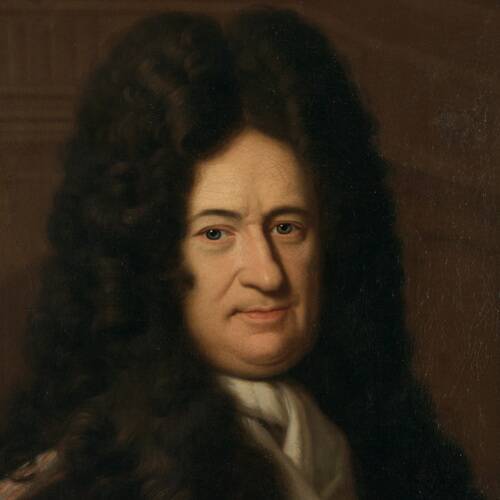
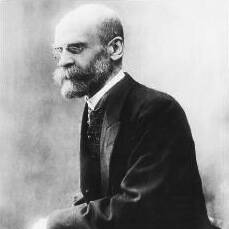
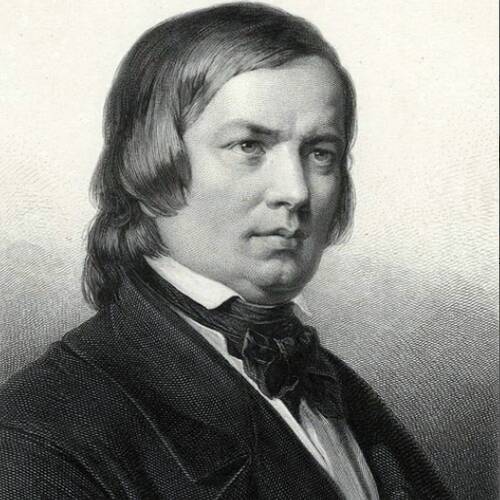
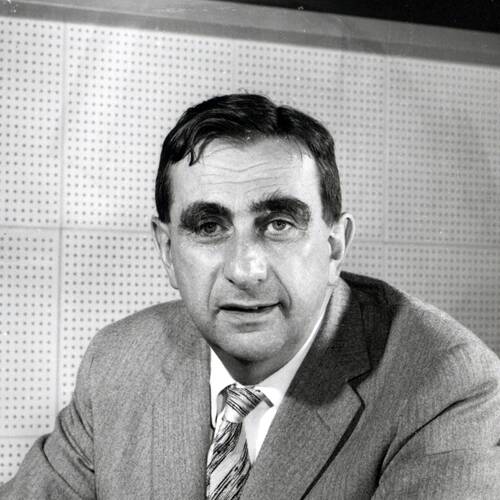
University of Leipzig alumni
-
Friedrich Nietzsche
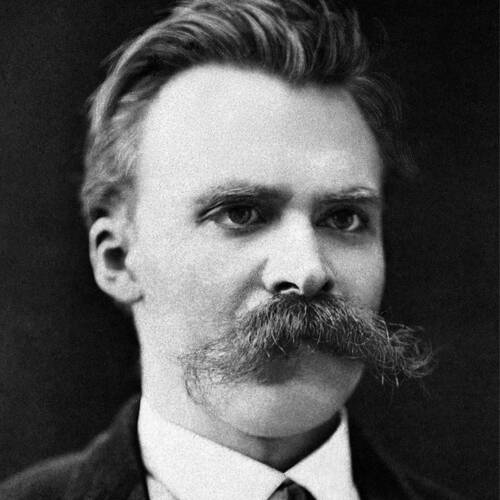
- Enrolled in the University of Leipzig
- Studied in 1865-1879
- Occupations
- playwrightpedagoguephilosophermusic criticcomposer
- Biography
-
Friedrich Wilhelm Nietzsche was a German philosopher who started his career as a classical philologist and turned to philosophy early in his academic career. In 1869, aged 24, he was appointed Professor of Classical Philology at the University of Basel. Plagued by health problems for most of his life, he resigned from the university in 1879. He afterward lived as an independent writer, spending much of his life in relative solitude and financial insecurity while moving between Switzerland, Italy, and southern France in search of climates that might alleviate his condition, and in the following decade, he completed much of his core writing. In 1889, aged 44, he suffered a mental breakdown and thereafter a complete loss of his mental faculties, with paralysis and vascular dementia, living his remaining 11 years under the care of his family until his death. His works and his philosophy have fostered not only extensive scholarship but also much popular interest.
-
Angela Merkel
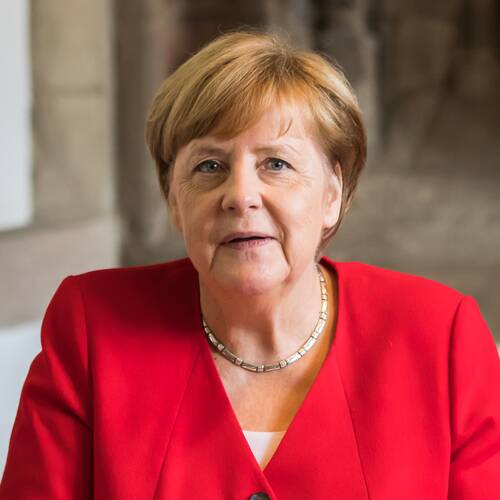
- Enrolled in the University of Leipzig
- 1973-1978 graduated with Diplom in physics
- Occupations
- physicistpolitician
- Biography
-
Angela Dorothea Merkel is a German retired politician who served as Chancellor of Germany from 2005 to 2021. She is the only woman to have held the office and the only from former East Germany. She was Leader of the Opposition from 2002 to 2005 and Leader of the Christian Democratic Union (CDU) from 2000 to 2018.
-
Johann Wolfgang von Goethe
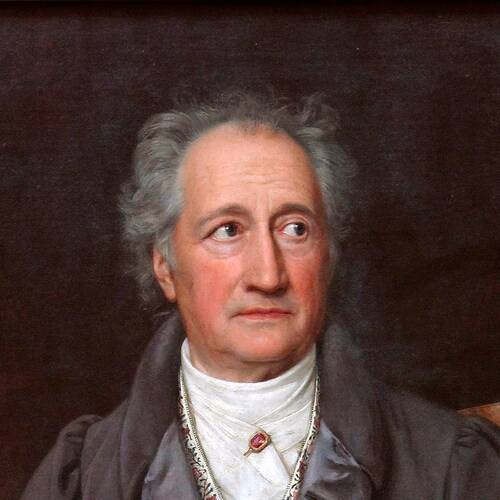
- Enrolled in the University of Leipzig
- 1765-1768 studied jurisprudence
- Occupations
- travel writercomposerprint collectorprintmakerpainter
- Biography
-
Johann Wolfgang von Goethe was a German polymath who is widely regarded as the most influential writer in the German language. His work has had a wide-ranging influence on literary, political, and philosophical thought in the Western world from the late 18th century to the present. A poet, playwright, novelist, scientist, statesman, theatre-director, and critic, Goethe wrote a wide range of works, including plays, poetry and aesthetic criticism, as well as treatises on botany, anatomy, and colour.
-
Richard Wagner
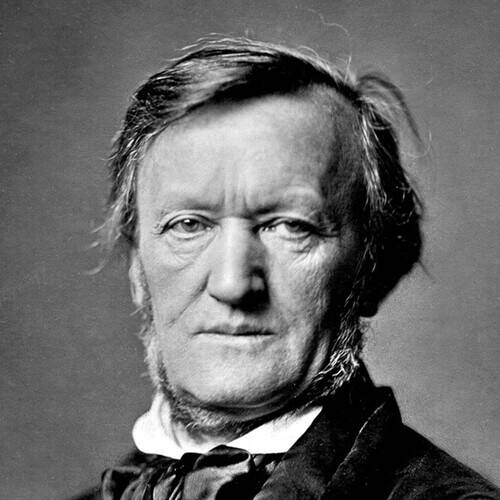
- Occupations
- music criticdiaristtheatrical directoressayistconductor
- Biography
-
Wilhelm Richard Wagner was a German composer, theatre director, essayist, and conductor, best known for his operas, although his mature works are often referred to as music dramas. Unlike most composers, Wagner wrote both the libretti and the music for all of his stage works. He first achieved recognition with works in the Romantic tradition of Carl Maria von Weber and Giacomo Meyerbeer, but revolutionised the genre through his concept of the Gesamtkunstwerk ("total work of art"), which sought to unite poetic, musical, visual, and dramatic elements. In this approach, the drama unfolds as a continuously sung narrative, with the music evolving organically from the text rather than alternating between arias and recitatives. Wagner outlined these ideas in a series of essays published between 1849 and 1852, most fully realising them in the first half of his four-opera cycle Der Ring des Nibelungen (The Ring of the Nibelung).
University of Leipzig faculties and divisions
| Faculty : Biology, Pharmacy and Psychology | Biochemistry, Biological and Life Sciences, Biology, Pharmacology, Pharmacy, Psychology |
|---|---|
| Faculty : Chemistry and Mineralogy | Chemistry, Crystallography, Mineralogy |
| Faculty : Economics and Management (including Civil Engineering) | Accountancy, Building Technologies, Business Administration, Business and Commerce, Business Computing, Civil Engineering, Construction Engineering, Economics, Finance, Industrial Engineering, Management, Real Estate, Statistics |
| Faculty : Education | Adult Education, Curriculum, Education, Education of the Handicapped, Educational Psychology, Educational Sciences, Primary Education, Secondary Education, Special Education |
| Faculty : History, Art and Oriental Studies | African Studies, Arabic, Archaeology, Art History, Asian Studies, Cultural Studies, Ethnology, Fine Arts, History, Music, Musicology, Oriental Studies, Religious Studies, Theatre |
| Faculty : Law | Law |
| Faculty : Mathematics and Computer Science | Computer Science, Mathematics |
| Faculty : Medicine | Biochemistry, Epidemiology, Forensic Medicine and Dentistry, Genetics, Medicine, Occupational Health, Physiology, Virology |
| Faculty : Philology | American Studies, Classical Languages, Comparative Literature, English Studies, German, Germanic Studies, Linguistics, Modern Languages, Philology, Romance Languages, Slavic Languages, Translation and Interpretation |
| Faculty : Physics and Earth Sciences | Earth Sciences, Geography, Geology, Geophysics, Meteorology, Paleontology, Physics |
| Faculty : Social Sciences and Philosophy | Ethics, Journalism, Logic, Media Studies, Philosophy, Political Sciences, Social Sciences, Sociology |
| Faculty : Sports Science | Physical Education, Rehabilitation and Therapy, Sports |
| Faculty : Theology | Religious Education, Theology |
| Faculty : Veterinary Science | Veterinary Science |
General information
| Alternative names | Universität Leipzig |
|---|---|
| Founded | 1409 |
| Motto | Aus Tradition Grenzen überschreiten |
Location and contacts
| Address | P.O. Box 100920 Ritterstraße 26 Leipzig, Saxony, 04009 Germany |
|---|---|
| City population | 620,000 |