Grenoble Institute of Technology: Statistics
Updated:


| Position | Category |
|---|---|
| #923 of 14,131 | In the World |
| #372 of 2,785 | In Europe |
| #32 of 224 | In France |
| #5 of 27 | In Auvergne-Rhone-Alpes |
| #1 of 2 | In Grenoble |
| #244 of 2,166 | For Computer Engineering |
| Top50% | For 105 other topics |
Quick Review
- Acceptance rate
- 30%
- Enrollment
- 7,646
- Type
- Non-profit
- Funding
- Public-private
partnership - Highest Degree
- Doctorate
- Website
- grenoble-inp.fr
- Languages
- French;English
Acceptance rate & Admissions
| Acceptance Rate | 30% |
|---|---|
| Admissions Requirements | Competitive entrance examination following 2-3 years further study after secondary school certificate (baccalauréat) or equivalent |
| Academic Calendar | September to June |
| Enrollment | 7,646 |
We've calculated the 30% acceptance rate for Grenoble Institute of Technology based on the ratio of admissions to applications and other circumstantial enrollment data. Treat this information as a rough guide and not as a definitive measure of your chances of admission. Different programs may have significantly varying admissions rates.
Research profile
Grenoble Institute of Technology is a world-class research university with 28,363 scientific papers published and 544,820 citations received. The research profile covers a range of fields, including Engineering, Physics, Chemistry, Quantum and Particle physics, Materials Science, Biology, Computer Science, Environmental Science, Organic Chemistry, and Electrical Engineering.
Grenoble Institute of Technology majors
by publication & citation count
Annual publication & citation counts
| Year | Publications | Citations |
|---|---|---|
| 1993 | 49 | 274 |
| 1994 | 44 | 294 |
| 1995 | 75 | 349 |
| 1996 | 58 | 407 |
| 1997 | 93 | 503 |
| 1998 | 94 | 519 |
| 1999 | 97 | 625 |
| 2000 | 107 | 729 |
| 2001 | 125 | 840 |
| 2002 | 301 | 1830 |
| 2003 | 198 | 1482 |
| 2004 | 224 | 1727 |
| 2005 | 208 | 2030 |
| 2006 | 294 | 2420 |
| 2007 | 516 | 2831 |
| 2008 | 819 | 3811 |
| 2009 | 1145 | 5562 |
| 2010 | 1152 | 7814 |
| 2011 | 1313 | 10804 |
| 2012 | 1313 | 13710 |
| 2013 | 1319 | 16715 |
| 2014 | 1109 | 20300 |
| 2015 | 1041 | 22720 |
| 2016 | 1062 | 24387 |
| 2017 | 1200 | 26282 |
| 2018 | 1528 | 28893 |
| 2019 | 1683 | 35384 |
| 2020 | 1903 | 43635 |
| 2021 | 1790 | 54090 |
| 2022 | 2136 | 53627 |
| 2023 | 2251 | 58534 |
| 2024 | 1858 | 58280 |
| 2025 | 1134 | 49427 |
Tuition
| Local studetns | Bachelor and Engineering Degree : 568,57; Master : 241,57 (EUR) |
|---|
Grenoble Institute of Technology has financial aid programs and on-campus housing.
Programs and Degrees
The table below displays academic fields with programs and courses that lead to Bachelor's, Master's, and Doctorate degrees offered by Grenoble Institute of Technology.
Note that the table provides a general overview and might not cover all the specific majors available at the university. Always visit the university's website for the most up-to-date information on the programs offered.
| Programs | Bachelor | Master | Doctoral |
|---|---|---|---|
| Art & Design | No | No | No |
| Biology | No | Yes | Yes |
| Business | No | Yes | No |
| Chemistry | Yes | Yes | Yes |
| Computer Science | Yes | Yes | Yes |
| Economics | No | Yes | No |
| Engineering | Yes | Yes | Yes |
| Environmental Science | Yes | Yes | Yes |
| Liberal Arts & Social Sciences | No | No | No |
| Mathematics | Yes | Yes | Yes |
| Medicine | No | No | No |
| Physics | Yes | Yes | Yes |
| Psychology | No | No | No |
| Diplôme d'ingénieur | Applied Mathematics, Biomedical Engineering, Chemical Engineering, Chemistry, Civil Engineering, Computer Science, Electrical Engineering, Electronic Engineering, Electronics and Automation, Energy Engineering, Engineering, Hydraulic Engineering, Industrial Engineering, Mechanical Engineering, Metallurgical Engineering, Multimedia, Nanotechnology, Nuclear Engineering, Paper Technology, Physical Engineering, Production Engineering, Telecommunications Engineering |
|---|---|
| Master | Business Administration, Chemistry, Civil Engineering, Cognitive Sciences, Earth Sciences, Electrical Engineering, Electronic Engineering, Electronics and Automation, Energy Engineering, Environmental Studies, Information Sciences, Management, Materials Engineering, Mathematics and Computer Science, Mechanical Engineering, Paper Technology, Physical Engineering, Physics, Sanitary Engineering |
| Doctorat | Chemistry, Cognitive Sciences, Computer Science, Earth Sciences, Electrical Engineering, Electronic Engineering, Energy Engineering, Environmental Studies, Industrial Management, Information Sciences, Information Technology, Law, Materials Engineering, Mathematics, Mechanical Engineering, Physics, Sanitary Engineering |
Grenoble Institute of Technology alumni
-
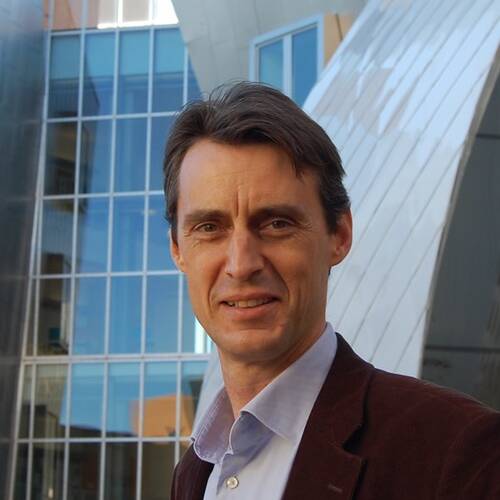
Rachid Yazami
- Occupations
- physicistengineer
- Biography
-
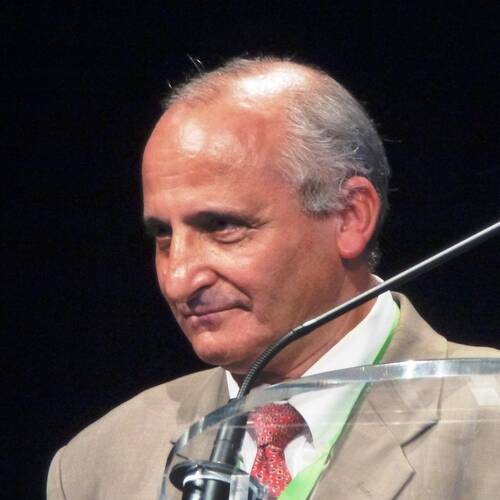
Rachid Yazami is a Moroccan scientist, engineer, and inventor. He is best known for his critical role in the development of the graphite anode (negative pole) for lithium-ion batteries and his research on fluoride ion batteries.
-
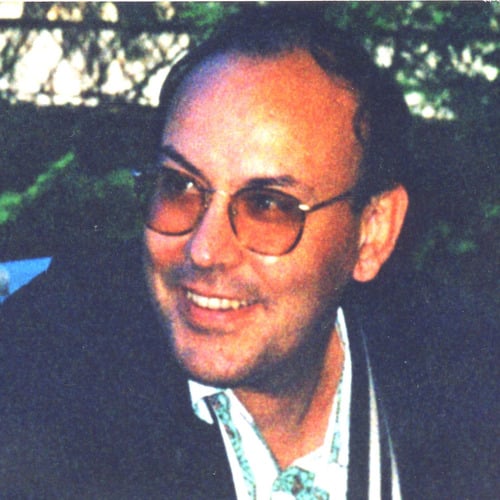
Loïk Le Floch-Prigent

- Occupations
- essayistengineerbusinessperson
- Biography
-
Loïk Gérard Henri Marie Joseph Le Floch-Prigent was a French engineer and businessman. He was CEO of Elf Aquitaine between July 1989 and 1993, then president of SNCF from December 1995 to July 1996, when he was indicted in connection with the Elf affair. He is particularly known in the "Françafrique" circles.
-
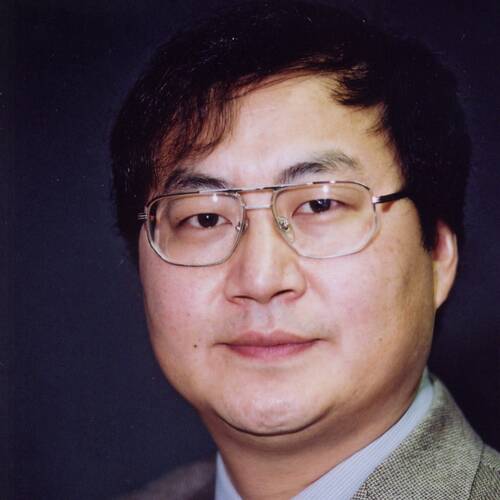
Charles Elachi
- Occupations
- engineerastronomer
- Biography
-
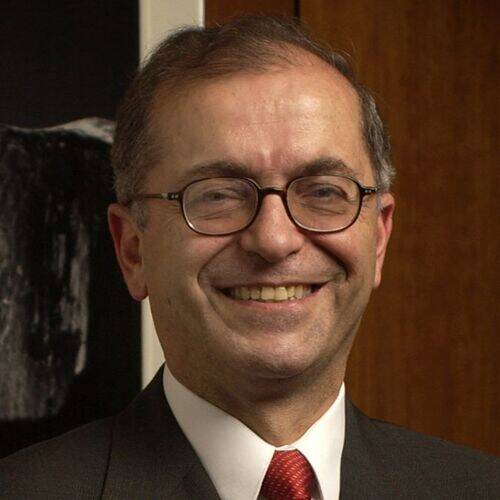
Charles Elachi is a Lebanese-American professor (emeritus) of electrical engineering and planetary science at the California Institute of Technology (Caltech). From 2001 to 2016 he was the 8th director of the Jet Propulsion Laboratory and vice president of Caltech.
-
Jean-Jacques Favier
- Occupations
- engineerastronautphysicist
- Biography
-
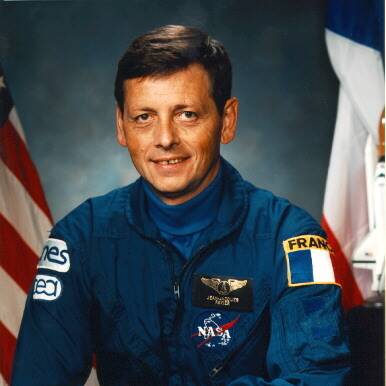
Jean-Jacques Favier was a German-born French engineer and a CNES astronaut who flew aboard the STS-78 NASA Space Shuttle mission in 1996. Favier was due to fly aboard the doomed Columbia mission in 2003 (STS-107), but later opted out of the mission. Jean-Jacques Favier was deputy director for space technology and deputy director for advanced concepts and strategy at CNES, director of the Solidification Laboratory at the French Atomic Energy Commission and research program director at the International Space University.





Grenoble Institute of Technology faculties and divisions
| Course/Programme : Preparatory Class | Mathematics, Physics |
|---|---|
| School : Advanced Systems and Networks (ESISAR) | Computer Networks, Systems Analysis |
| School : Applied Mathematics and Computer Science (Ensimag) | Applied Mathematics, Computer Science |
| School : Energy, Water and Environmental Science (Ense3) | Energy Engineering, Environmental Studies, Water Science |
| School : Industrial Engineering | Industrial Engineering |
| School : Paper Technology, Vegetable Biomass and Biomaterials (Pagora) | Materials Engineering, Media Studies, Paper Technology, Printing and Printmaking |
| School : Physics, Applied Physics, Electronics and Materials Science (Phelma) | Applied Physics, Electronic Engineering, Materials Engineering, Physics |
General information
| Alternative names | Grenoble INP Institut Polytechnique de Grenoble |
|---|---|
| Founded | 1900 |
| Accreditation | Engineering Titles Commission (CTI); Ministry of Higher Education, Research and Innovation |
| Motto | Accélérateur d'avenirs Springboard to the Future |
Location and contacts
| Address | 46 avenue Félix Viallet Grenoble, 38031 France |
|---|---|
| City population | 156,000 |