University of Glasgow: Statistics
Updated:

| Position | Category |
|---|---|
| #94 of 14,131 | In the World |
| #18 of 2,785 | In Europe |
| #8 of 163 | In the United Kingdom |
| #2 of 18 | In Scotland |
| #1 of 5 | In Glasgow |
| #5 of 1,021 | For UX/UI Desgin |
| Top100 | For 64 other topics |
Quick Review
- Type
- Non-profit
- Funding
- Public-private
partnership - Highest Degree
- Doctorate
- Website
- www.gla.ac.uk
- Languages
- English
- Acceptance rate
- 48%*
* The University of Glasgow is among the institutions that don't provide data on acceptance rates. This might happen because the university has programs where applicants only need to meet admission requirements to enroll and don't necessarily compete with others.
We estimate the above acceptance rate based on admission statistics of closely ranked nearby universities with similar research profiles that do publish such data.
Acceptance rate & Admissions
| Admissions Requirements | Competitive admission |
|---|---|
| Academic Calendar | September to June |
Research profile
University of Glasgow is a world-class research university with 169,311 scientific papers published and 5,871,903 citations received. The research profile covers a range of fields, including Biology, Medicine, Liberal Arts & Social Sciences, Chemistry, Engineering, Computer Science, Physics, Environmental Science, Genetics, and Biochemistry.
University of Glasgow majors
by publication & citation count
Annual publication & citation counts
| Year | Publications | Citations |
|---|---|---|
| 1993 | 1573 | 18297 |
| 1994 | 1646 | 20308 |
| 1995 | 1842 | 23094 |
| 1996 | 1869 | 24238 |
| 1997 | 1923 | 26842 |
| 1998 | 2145 | 29783 |
| 1999 | 2151 | 33695 |
| 2000 | 2396 | 37557 |
| 2001 | 2284 | 42231 |
| 2002 | 2687 | 50270 |
| 2003 | 2842 | 59568 |
| 2004 | 2776 | 67617 |
| 2005 | 2943 | 76785 |
| 2006 | 3195 | 86660 |
| 2007 | 3411 | 97150 |
| 2008 | 3625 | 106946 |
| 2009 | 4140 | 122305 |
| 2010 | 4289 | 136752 |
| 2011 | 4304 | 155444 |
| 2012 | 4644 | 174668 |
| 2013 | 4768 | 192764 |
| 2014 | 5224 | 205813 |
| 2015 | 5477 | 217780 |
| 2016 | 5707 | 233343 |
| 2017 | 5863 | 252110 |
| 2018 | 6307 | 275616 |
| 2019 | 7069 | 319920 |
| 2020 | 7986 | 383481 |
| 2021 | 7988 | 443700 |
| 2022 | 8131 | 434599 |
| 2023 | 8814 | 454448 |
| 2024 | 7531 | 453315 |
| 2025 | 5867 | 412207 |
Programs and Degrees
The table below displays academic fields with programs and courses that lead to Bachelor's, Master's, and Doctorate degrees offered by University of Glasgow.
Note that the table provides a general overview and might not cover all the specific majors available at the university. Always visit the university's website for the most up-to-date information on the programs offered.
| Programs | Bachelor | Master | Doctoral |
|---|---|---|---|
| Art & Design | Yes | Yes | Yes |
| Biology | Yes | Yes | Yes |
| Business | Yes | Yes | Yes |
| Chemistry | Yes | Yes | Yes |
| Computer Science | Yes | Yes | Yes |
| Economics | Yes | Yes | Yes |
| Engineering | Yes | Yes | Yes |
| Environmental Science | Yes | Yes | Yes |
| Liberal Arts & Social Sciences | Yes | Yes | Yes |
| Mathematics | Yes | Yes | Yes |
| Medicine | Yes | Yes | Yes |
| Physics | Yes | Yes | Yes |
| Psychology | Yes | Yes | Yes |
| Master's Degree | Design, Education, Engineering Drawing and Design, Fine Arts, Literature, Philosophy |
|---|---|
| Doctorate | Accountancy, Aeronautical and Aerospace Engineering, Archaeology, Art History, Astronomy and Space Science, Biological and Life Sciences, Biomedical Engineering, Celtic Languages and Studies, Central European Studies, Chemistry, Civil Engineering, Classical Languages, Comparative Literature, Computer Science, Earth Sciences, Eastern European Studies, Economics, Education, Electronic Engineering, Energy Engineering, English, Environmental Studies, Film, Finance, French, Geography (Human), History, Italian, Law, Management, Mathematics, Media Studies, Medicine, Music, Philosophy, Physics, Political Sciences, Power Engineering, Psychology, Religious Studies, Slavic Languages, Sociology, Statistics, Theatre, Theology, Translation and Interpretation, Urban Studies, Veterinary Science |
University of Glasgow alumni
-
Gerard Butler

- Occupations
- actortelevision actorlawyerfilm actorstage actor
- Biography
-
Gerard James Butler is a Scottish actor and film producer. After studying law, he turned to acting in the mid-1990s with small roles in productions such as Mrs Brown (1997), the James Bond film Tomorrow Never Dies (1997), and Tale of the Mummy (1998). In 2000, he starred as Count Dracula in the gothic horror film Dracula 2000. He played Attila the Hun in the miniseries Attila (2001), then appeared in the films Reign of Fire (2002) and Lara Croft: Tomb Raider – The Cradle of Life (2003) before starring in the science fiction film Timeline (2003). He played Erik, The Phantom in Joel Schumacher's 2004 musical The Phantom of the Opera.
-
Adam Smith
- Occupations
- non-fiction writerpublisherFrench moralisteconomistuniversity teacher
- Biography
-
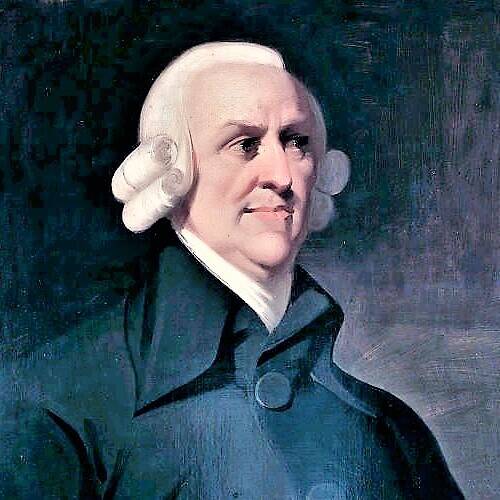
Adam Smith was a Scottish economist and philosopher who was a pioneer in the field of political economy and key figure during the Scottish Enlightenment. Seen by many as the "father of economics" or the "father of capitalism", he is primarily known for two classic works: The Theory of Moral Sentiments (1759) and An Inquiry into the Nature and Causes of the Wealth of Nations (1776). The latter, often abbreviated as The Wealth of Nations, is regarded as his magnum opus, marking the inception of modern economic scholarship as a comprehensive system and an academic discipline. Smith refuses to explain the distribution of wealth and power in terms of divine will and instead appeals to natural, political, social, economic, legal, environmental and technological factors, as well as the interactions among them. The work is notable for its contribution to economic theory, particularly in its exposition of the concept of absolute advantage.
-
James Watt
- Occupations
- chemistentrepreneurphysicisttechnicianmathematician
- Biography
-
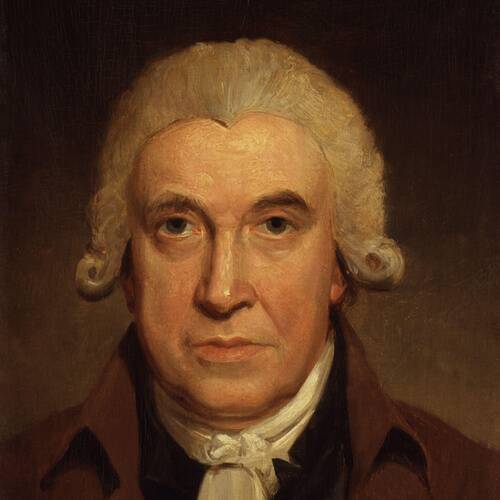
James Watt FRS FRSE was a Scottish inventor, engineer and chemist who improved on Thomas Newcomen's 1712 Newcomen steam engine with his Watt steam engine in 1776, which was fundamental to the changes brought by the Industrial Revolution in both his native Great Britain and the rest of the world.
-
David Livingstone
- Occupations
- explorerwriterphysician writergeographermissionary
- Biography
-
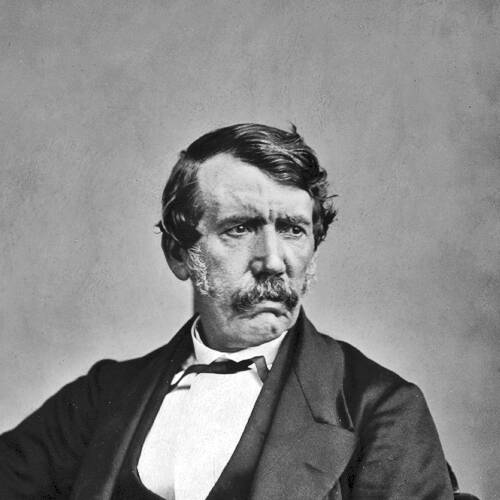
David Livingstone was a Scottish doctor, Congregationalist, pioneer Christian missionary with the London Missionary Society, and an explorer in Africa. Livingstone was married to Mary Moffat Livingstone, from the prominent 18th-century Moffat missionary family. Livingstone came to have a mythic status as a Protestant missionary martyr, working-class "rags-to-riches" inspirational story, scientific investigator and explorer, imperial reformer, anti-slavery crusader, and advocate of British commercial and colonial expansion. As a result, he became one of the most popular British heroes of the late 19th-century Victorian era.


University of Glasgow faculties and divisions
| College : Arts | Archaeology, Art History, Arts and Humanities, Celtic Languages and Studies, Classical Languages, Czech, English, European Languages, Film, French, History, Italian, Media Studies, Music, Philosophy, Polish, Psychology, Russian, Slavic Languages, Spanish, Theatre, Theology |
|---|---|
| College : Medical, Veterinary and Life Sciences | Anatomy, Biochemistry, Biological and Life Sciences, Cell Biology, Dentistry, Genetics, Immunology, Marine Biology, Medicine, Microbiology, Molecular Biology, Neurosciences, Nursing, Pharmacology, Physiology, Surgery, Veterinary Science, Zoology |
| College : Science and Engineering | Aeronautical and Aerospace Engineering, Architecture, Astronomy and Space Science, Biomedical Engineering, Chemistry, Civil Engineering, Computer Science, Earth Sciences, Electrical and Electronic Engineering, Geography, Mathematics, Mechanical Engineering, Physics, Psychology, Statistics |
| College : Social Sciences | Accountancy, Business Administration, Central European Studies, Eastern European Studies, Economics, Education, Environmental Studies, Finance, Health Sciences, Law, Political Sciences, Primary Education, Religious Education, Social Policy, Sociology |
| School : Glasgow School of Art | Architecture, Communication Arts, Computer Graphics, Engineering Drawing and Design, Fashion Design, Interior Design, Jewellery Art, Painting and Drawing, Photography, Sculpture, Textile Design |
General information
| Alternative names | UofG |
|---|---|
| Founded | 1451 |
| Motto | Via, Veritas, Vita The Way, the Truth and the Life (John 14:6) |
| Colors | black, yellow |
Location and contacts
| Address | University Avenue Glasgow, G12 8QQ United Kingdom |
|---|---|
| City population | 626,000 |