University of Cambridge: Statistics
Updated:
| Position | Category |
|---|---|
| #6 of 14,131 | In the World |
| #2 of 2,785 | In Europe |
| #2 of 163 | In the United Kingdom |
| #2 of 131 | In England |
| #1 of 2 | In Cambridge |
| #1 of 2,454 | For Computational Chemistry |
| Top1-3 | For 10 other topics |
Quick Review
- Acceptance rate
- 21%
- Type
- Non-profit
- Funding
- Public-private
partnership - Highest Degree
- Doctorate
- Website
- www.cam.ac.uk
- Languages
- English
Acceptance rate & Admissions
| Acceptance Rate | 21% |
|---|---|
| Admissions Requirements | Competitive admission |
| Academic Calendar | October to June (October - December; January-March; April-June) |
We've calculated the 21% acceptance rate for University of Cambridge based on the ratio of admissions to applications and other circumstantial enrollment data. Treat this information as a rough guide and not as a definitive measure of your chances of admission. Different programs may have significantly varying admissions rates.
Research profile
University of Cambridge is a world-class research university with 385,413 scientific papers published and 18,309,673 citations received. The research profile covers a range of fields, including Biology, Chemistry, Physics, Engineering, Liberal Arts & Social Sciences, Computer Science, Medicine, Environmental Science, Quantum and Particle physics, and Genetics.
University of Cambridge majors
by publication & citation count
Annual publication & citation counts
| Year | Publications | Citations |
|---|---|---|
| 1993 | 3830 | 63528 |
| 1994 | 3951 | 68619 |
| 1995 | 4461 | 77575 |
| 1996 | 4635 | 85752 |
| 1997 | 4751 | 93573 |
| 1998 | 4897 | 104219 |
| 1999 | 5150 | 117014 |
| 2000 | 5502 | 134724 |
| 2001 | 5685 | 148212 |
| 2002 | 6370 | 175378 |
| 2003 | 6786 | 198390 |
| 2004 | 6907 | 221824 |
| 2005 | 7242 | 251309 |
| 2006 | 7840 | 280168 |
| 2007 | 8221 | 314730 |
| 2008 | 8563 | 346985 |
| 2009 | 9400 | 389489 |
| 2010 | 9783 | 435096 |
| 2011 | 10613 | 491511 |
| 2012 | 11359 | 548431 |
| 2013 | 11915 | 607467 |
| 2014 | 12554 | 654224 |
| 2015 | 12925 | 699146 |
| 2016 | 13301 | 744994 |
| 2017 | 14078 | 802374 |
| 2018 | 15177 | 899690 |
| 2019 | 19339 | 1007625 |
| 2020 | 18870 | 1195145 |
| 2021 | 19671 | 1343766 |
| 2022 | 17888 | 1266136 |
| 2023 | 17296 | 1316088 |
| 2024 | 14247 | 1307569 |
| 2025 | 11592 | 1152725 |
Tuition
The tuition table for University of Cambridge gives an overview of costs but prices are approximate and subject to change and don't include accommodation, textbooks, or living expenses. The costs of programs might differ significantly for local and international students. The only source of truth for current numbers is the university's official website.
| Program | Annual Tuition Cost | Currency |
|---|---|---|
| Undergraduate | £9,250 | GBP |
| Graduate (Masters) | £9,250 - £38,000 | GBP |
| Graduate (PhD) | £9,250 - £25,000 | GBP |
| Executive MBA | £69,000 | GBP |
| Master of Finance | £37,500 | GBP |
| Master of Accounting | £37,500 | GBP |
| Master of Corporate Law | £28,500 | GBP |
The University of Cambridge has financial aid programs and on-campus housing.
Programs and Degrees
The table below displays academic fields with programs and courses that lead to Bachelor's, Master's, and Doctorate degrees offered by University of Cambridge.
Note that the table provides a general overview and might not cover all the specific majors available at the university. Always visit the university's website for the most up-to-date information on the programs offered.
| Programs | Bachelor | Master | Doctoral |
|---|---|---|---|
| Art & Design | Yes | Yes | Yes |
| Biology | Yes | Yes | Yes |
| Business | Yes | Yes | Yes |
| Chemistry | Yes | Yes | Yes |
| Computer Science | Yes | Yes | Yes |
| Economics | Yes | Yes | Yes |
| Engineering | Yes | Yes | Yes |
| Environmental Science | Yes | Yes | Yes |
| Liberal Arts & Social Sciences | Yes | Yes | Yes |
| Mathematics | Yes | Yes | Yes |
| Medicine | Yes | Yes | Yes |
| Physics | Yes | Yes | Yes |
| Psychology | Yes | Yes | Yes |
| Bachelor's Degree | Fine Arts |
|---|---|
| Doctorate | Ancient Languages, Anthropology, Applied Mathematics, Archaeology, Architecture, Asian Studies, Astronomy and Space Science, Biochemistry, Biological and Life Sciences, Biotechnology, Celtic Languages and Studies, Chemical Engineering, Chemistry, Classical Languages, Computer Science, Criminal Law, Development Studies, Earth Sciences, Economics, Education, Engineering, English, French, Genetics, Geography, German, History, International Studies, Italian, Latin American Studies, Law, Linguistics, Management, Medicine, Middle Eastern Studies, Music, Neurosciences, Nordic Studies, Obstetrics and Gynaecology, Oncology, Paediatrics, Pathology, Pharmacy, Physics, Physiology, Political Sciences, Portuguese, Psychiatry and Mental Health, Psychology, Public Health, Religious Studies, Slavic Languages, Sociology, Spanish, Surgery, Theology, Veterinary Science, Zoology |
University of Cambridge alumni
-
Stephen Hawking
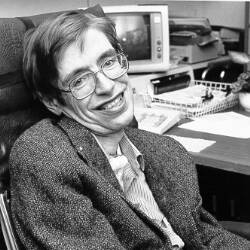
- Enrolled in the University of Cambridge
- 1962-1966 graduated with doctorate
- Occupations
- theoretical physicistwritercosmologist
- Biography
-
Stephen William Hawking was an English theoretical astrophysicist, cosmologist, and author who was director of research at the Centre for Theoretical Cosmology at the University of Cambridge. Between 1979 and 2009, he was the Lucasian Professor of Mathematics at Cambridge, widely viewed as one of the most prestigious academic posts in the world.
-
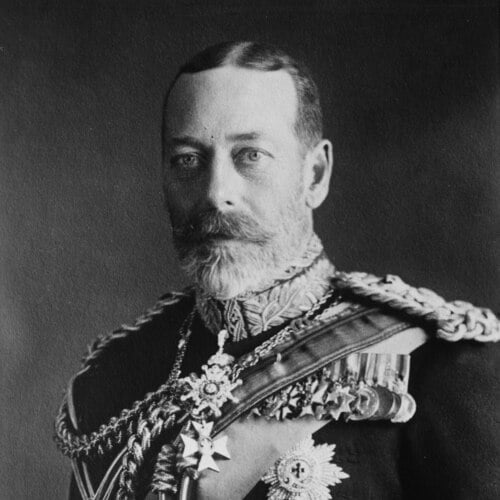
George VI
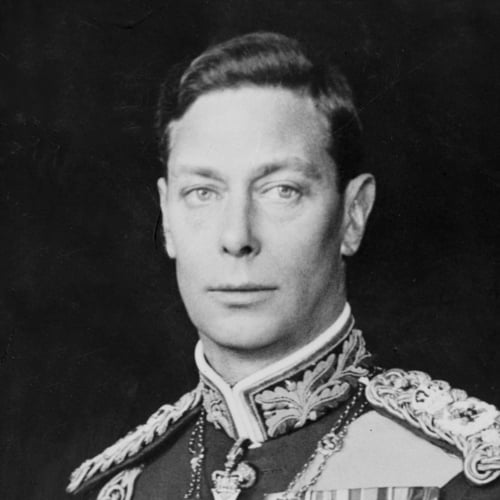
- Enrolled in the University of Cambridge
- Studied in 1920
- Occupations
- monarcharistocratmilitary officertennis player
- Biography
-
George VI was King of the United Kingdom and the Dominions of the British Commonwealth from 11 December 1936 until his death in 1952. He was also the last Emperor of India from 1936 until the British Raj was dissolved in August 1947, and the first Head of the Commonwealth following the London Declaration of 1949.
-
Robert Oppenheimer
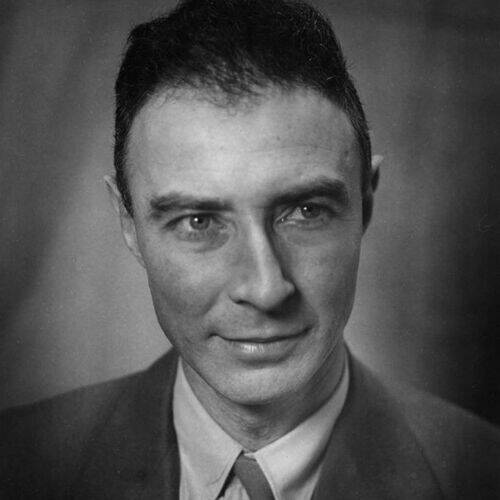
- Occupations
- physicistuniversity teacherengineerscientistresearcher
- Biography
-
J. Robert Oppenheimer was an American theoretical physicist who served as the director of the Manhattan Project's Los Alamos Laboratory during World War II. He is often called the "father of the atomic bomb" for his role in overseeing the development of the first nuclear weapons.
-
Isaac Newton
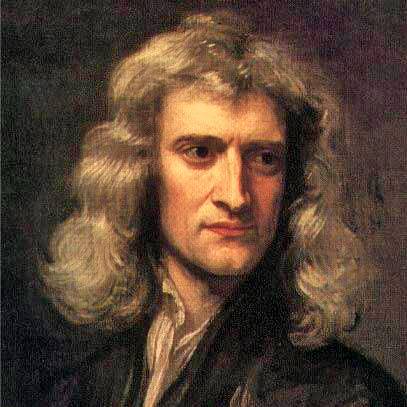
- Enrolled in the University of Cambridge
- 1661-1665 graduated with Bachelor of Arts
- 1667-1668 graduated with Master of Arts
- Occupations
- mathematicianphilosopher
- Biography
-
Sir Isaac Newton was an English polymath who was a mathematician, physicist, astronomer, alchemist, theologian, author and inventor. He was a key figure in the Scientific Revolution and the Enlightenment that followed. His book Philosophiæ Naturalis Principia Mathematica (Mathematical Principles of Natural Philosophy), first published in 1687, achieved the first great unification in physics and established classical mechanics. Newton also made seminal contributions to optics, and shares credit with the German mathematician Gottfried Wilhelm Leibniz for formulating infinitesimal calculus, although he developed calculus years before Leibniz. Newton contributed to and refined the scientific method, and his work is considered the most influential in bringing forth modern science.

University of Cambridge faculties and divisions
| Centre : African Studies | African Studies |
|---|---|
| Centre : Business Research (ESRC) | Business and Commerce |
| Centre : English and Applied Linguistics | Applied Linguistics, English |
| Centre : International Studies | International Studies |
| Centre : Islamic Studies | Islamic Studies |
| Centre : Language Studies | Modern Languages |
| Centre : Latin American Studies | Latin American Studies |
| Centre : South Asian Studies | South Asian Studies |
| Centre : Superconductivity Research | Electrical Engineering |
| Department/Division : Applied Mathematics and Theoretical Physics | Applied Mathematics, Physics |
| Department/Division : Chemical Engineering | Chemical Engineering |
| Department/Division : Chemistry | Chemistry |
| Department/Division : Clinical Veterinary Medicine | Veterinary Science |
| Department/Division : History and Philosophy of Science | History, Philosophy |
| Department/Division : Land Economy | Rural Planning |
| Department/Division : Physics | Physics |
| Faculty : Architecture and History of Art | Architecture, Art History |
| Faculty : Asian and Middle Eastern Studies | Asian Studies, Middle Eastern Studies, Oriental Languages |
| Faculty : Biology | Anatomy, Biochemistry, Biology, Botany, Experimental Psychology, Genetics, Pathology, Pharmacology, Physiology, Zoology |
| Faculty : Classics | Classical Languages |
| Faculty : Divinity | Theology |
| Faculty : Economics and Politics | Economics, Political Sciences |
| Faculty : Education | Education |
| Faculty : Engineering | Engineering |
| Faculty : English | Celtic Languages and Studies, English |
| Faculty : History | History |
| Faculty : Law | Law |
| Faculty : Modern and Medieval Languages | French, German, Italian, Linguistics, Medieval Studies, Modern Languages, Portuguese, Slavic Languages, Spanish |
| Faculty : Music | Music |
| Faculty : Philosophy | Philosophy |
| Institute : Agricultural Botany | Botany |
| Institute : Archaeology and Anthropology | Anthropology, Archaeology |
| Institute : Astronomy | Astronomy and Space Science |
| Institute : Biotechnology | Biotechnology |
| Institute : Cancer | Biology, Oncology |
| Institute : Criminology | Criminology |
| Institute : European Bioinformatics | Information Technology |
| Institute : Management Studies | Management |
| Institute : Manufacturing | Production Engineering |
| Institute : Mathematical Sciences | Mathematics |
| Institute : Orthodox Christian Studies | Christian Religious Studies |
| Institute : Public Health | Public Health |
| Institute : Theology | Theology |
| Institute : Theorical Geophysics | Geophysics |
| Laboratory : Computer and Computing Service | Computer Science |
| Research Division : Medicine | Medicine |
| School : Clinical Medicine | Biochemistry, Community Health, Genetics, Haematology, Medicine, Obstetrics and Gynaecology, Oncology, Paediatrics, Psychiatry and Mental Health, Public Health, Radiology, Surgery |
General information
| Founded | 1209 |
|---|---|
| Motto | Hinc lucem et pocula sacra |
| Colors | cambridge blue |
Location and contacts
| Address | The Old Schools Trinity Lane Cambridge, CB2 1TN United Kingdom |
|---|---|
| City population | 124,000 |